

- glossary

Glossary
Here we describe some terms which are relevant in conjunction with actuation systems and our products. This compilations is neither exhaustive nor absolutely perfect, since there are always different point of views. We are looking forward to any comments or suggestions (comments).
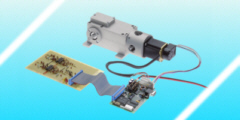
| actuation system | equipment to move a load. Combination of a mechanical component (the real force or torque generator), of electrical components (to drive the motor) and of information technology (to process the commands). The combination of these three areas is called mechatronics. |
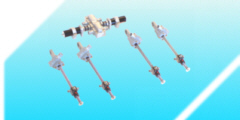
| actuator | mechanical device to generate movements (linear, rotary). |
| brake chopper | electronic device for the protection against over-voltages. Usually is is necessary for high dynamic actuation systems |
| brushless motor | technology for electro-magnetic motors. Needs more complex electronics, but has simpler mechanical parts. |
| brush motor | technology for electro-magnetic motors. Needs simpler electronics, but has more complex mechanical parts (brushes). |
| control | The control allows by measuring the position (possibly the velocity) a fast and precise motion. It also greatly reduces the influences of disturbances (e.g. additional loads). |
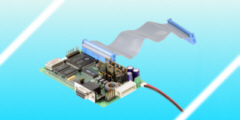
| digital signal processor, DSP | highly specialised fast chip computer. It enables the control of complex motion profiles. |
| EMC | Electro-magnetic compatibility: the interaction between electronic components. |
| encoder (incremental, absolute) | technology for position sensors. The function principle is counting of pulses (incremental) or comparing of patterns (absolute). |
| FEM | finite element method: method to calculate mechanical stresses in mechanical parts. |
| fly-by-wire | replacement of mechanical operation devices by electrical signals. The necessary force or torque is generated on the spot and is not transferred. So mechanical links or shafts are no more necessary. Advantage: less weight, more precision. |
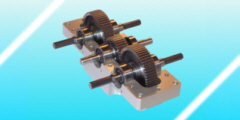
| harmonic drive | technology for high precision high reduction gear. |
| IGBT | technology for electronic power switches (Isolated Gate Bipolar Transistor); offer advantages at high supply voltages. |
| linear drive | actuator which moves a load in a linear motion (contrary to rotary drives). |
| mechatronics | artificial phrase from mechanics and electronics. In recent years information technology became another important aspect (software, control). The combined design of the three fields lays the foundation of the design of compact reliable actuation systems. |
| MOSFET | technology for electronic power switches (Metal Oxide Semiconductor Field Effect Transistor); offer advantages at high motor currents. |
| piezo ceramic | alternative to traditional electro-magnetic motor in special applications. Generates extremely high forces at extremely small displacements. |
| positioning system | alternative term for "actuation system". |
| potentiometer | technology for position sensors. The function principle is based on the change of the electrical resistance which is proportional to the angle (rotary) or the travel (linear). |
| resolver | technology for position sensor, combines precision and robustness. |
| stepper motor | technology for electrical motors or actuation systems. The stepper motor can easily rotate in fixed discrete steps. Counting the steps replaces the position sensors. |
| rotary drive | actuator which moves a load in a rotary motion (contrary to linear drives). |
| servo drive | alternative term for "actuation system". |
| x-by-wire | The operation of different mechanical loads by electrical signals ("by wire") instead of links or hydraulic lines was strongly influenced by aviation (fly-by-wire), but is now reaching different areas (e.g. automobile: brake-by-wire). |
 top
top